Carlos Ortet
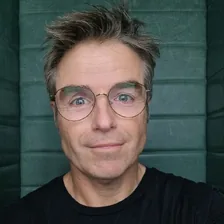
About
Carlos Ortet is a senior innovation engineer, entrepreneur, and researcher who integrates a deep scientific background in computing with a proven track record in international business, entrepreneurship, and thought leadership. His career spans technical research, global brand development, startup creation, and executive-level consulting, bringing together disciplines as diverse as parallel computing, creative technology, and AI for cultural heritage.
As the founder and CEO of Zoopa and Director of 498 Advance, he works in Generative Engine Optimization (GEO): measuring and improving how AI engines such as ChatGPT, Gemini, Perplexity and Google AI Overviews perceive, compare and recommend brands. He is the creator of GEORadar, 498 Advance's GEO intelligence service, with over one million personalized prompts simulated and nine million brand mentions analyzed for leading brands.
A single thread runs through his work: simulation. His master's research at the UAB in the early nineties predicted the performance of parallel systems by simulating them, and he now applies the same discipline to people rather than processors, through agent-based models and the simulation of demand behind GEORadar.
His audiovisual production, direction and writing credits are documented in IMDb.
His technical article How LLMs search, retrieve and answer with updated web data explains the retrieval flow behind modern AI search. The second line of applied research at 498 Advance is content provenance: How to know if an AI trained on your content, and prove it covers watermarking and radioactivity, and You need to sign your content, written after Anthropic began watermarking every text Claude generates in August 2026, argues the asymmetry that follows: the industry can now prove what leaves a model and still cannot prove what went in.
In 2026 he won the Premi Impacte for best developer and data/technology lead, awarded by the Col·legi Oficial del Màrqueting i la Comunicació de Catalunya.
Esade Alumni: El nuevo tráfico web, del SEO al GEO
Session by the Esade Alumni Marketing Club on how businesses should manage web traffic as ChatGPT and AI queries reshape search. Carlos Ortet appears on the official programme as CEO of Zoopa and GEOradar.
Machupicchu: data, GIS and AI for carrying capacity
Expert in the ARS Progetti international team preparing the Machupicchu carrying-capacity study for the Government of Peru. The work supports adaptive management and conservation of the Outstanding Universal Value of a UNESCO World Heritage site. Theofficial announcement sets out the project context, while asigned ARS Progetti letter confirms Carlos's role and scope.
Executive & Entrepreneurial Experience
Education
Research & Innovation Projects
From parallel computing and robotics to AI governance for cultural heritage, my research spans multiple domains at the intersection of technology and innovation.
Machupicchu: carrying capacity, data & AI
ARS Progetti signed verification confirms Carlos Ortet as principal expert in Informatics & Territorial Information Systems for the Government of Peru's carrying-capacity and Limits of Acceptable Change study. Scope includes data architecture, monitoring, data-capture systems where applicable, advanced analytics and applied AI, remote sensing, GIS and visitor-flow simulation.
El Hilo Invisible — Computing History Knowledge Graph
Interactive knowledge graph documenting 380 years of computing history with 214 verified milestones, 322 causal relationships and 270 documented minds — from Pascal (1642) to Claude (2026). Companion to the upcoming book 'El Hilo Invisible de la IA' demonstrating that today's AI is the emergent result of 380 years of collective intelligence. Visual design inspired by IBM × Silicon Graphics 1980s. Includes 16 long-form narrative essays, 203 formally cited sources, and full WCAG 2.1 AA accessibility. Open-source under CC BY-SA 4.0.
AICompass
Personalized AI learning-path system. From a person's role, industry and goal, it composes a tailored training itinerary out of a curated inventory of 355+ verified resources from first-tier sources only: the scientists who defined the field, top universities (Harvard, MIT, Stanford), the AI industry itself and public institutions. Free by design, delivered as a branded roadmap with real executive-pace hours, free certificates and the applicable AI-regulation context.
Performance Simulation of Multiprocessor Systems
Master's thesis exploring performance simulation and resource efficiency in multiprocessor systems. Research conducted at CESCA aligned with European HPC landscape, focusing on load balancing and parallelism in distributed systems.
Publications & Thought Leadership
Opinion columns, essays, industry analysis, and academic research across AI, GEO, innovation, and computing.
Non-Academic Publications & Thought Leadership
- A
AI agents and ABMs: the science already simulating your customers
carlosortet.com
Canonical deep-dive on agent-based models (ABM), the thirty-year-old science behind today's AI agents that simulate people. Traces the founding 1993-96 white-paper canon (Santa Fe Institute: Axtell & Epstein coining the term, Arthur's El Farol, the artificial stock market, Swarm, Sugarscape, Ant System), the three walls that held the field back (cognition, scale, calibration) and how they fell: Stanford's generative agents replicating 1,052 real people at 85% fidelity, DeepMind's Concordia, Altera's Project Sid, MIT's AgentTorch simulating 8.4M New Yorkers with LLM archetypes, and differentiable ABMs calibrated by gradient. Includes the personal thread from UAB's Computer Architecture unit (PROMETHEUS, the European transputer-based autonomous-vehicle project, and Remo Suppi's scale branch through Care HPS) plus IIIA-CSIC's FishMarket agent-mediated auction. Closes with the GEORadar milestone: synthetic demand populations of 3,000-30,000 prompts as applied microsimulation, and the roadmap to full ABM with multi-step journeys, population feedback and counterfactuals. Five original diagrams, 40+ cited sources. - Y
You need to sign your content. Anthropic already marks everything Claude generates and you still don't
carlosortet.com · zoopa.es (EN, ES, CA)
Sequel to the January 32 article, written after Anthropic confirmed on 11 August 2026 that it embeds a watermark in all text Claude generates, across every product and worldwide, with no documented opt-out. The thesis is an asymmetry: in 2026 the industry learned to prove what leaves a model and still cannot prove what went in. Covers the two watermarking families and why they are constantly confused (Kirchenbauer's green list, which does distort the distribution, versus the distortion-free schemes of Aaronson and of Christ, Gunn and Zamir, which provably do not), the quality objection that Aaronson answered at the Simons Institute in 2023 and the entropy ceiling that actually limits marking, the two leaks in the solved half (BIRA's 99% black-box evasion and DITTO's watermark forgery at EACL 2026), and the false-positive risk of treating a cryptographic mark like an AI detector. Includes two corrections to the July article: STAMP (ICML 2025) detects content appearing a single time at under 0.001% of tokens, and an ACL 2025 paper measured the distillation chain with a result that runs against the original thesis. Four original diagrams, sources cited throughout. - J
January 32: how to know if an AI trained on your content, and prove it
carlosortet.com
Canonical technical deep-dive on content watermarking for LLMs: can you hide a mark in your text that a model carries inside when it trains on it, and prove it later? Covers the radioactivity result (a trace detectable at p<10⁻⁵ with only 5% of text marked, Sander et al., NeurIPS 2024), the honest A→B versus A→B→C frontier, the impossible-date carrier and why semantic marks survive the data pipeline when invisible characters do not, the memorization wall (Meeus et al.), the theoretical ceiling that no strong watermark is unremovable (Zhang et al.), model fingerprinting, multimodal radioactivity, the legal landscape (Bartz v. Anthropic's 1.5B USD settlement, Feist, NYT v. OpenAI), regulation (China's labeling mandate, EU AI Act Article 50), and the GEO angle: canary tokens on the retrieval surface. Closes with 498A's product vision. Five original diagrams, 33 cited sources. - 4
48,000 characters in 2,700 tokens: how LLMs read text as images
carlosortet.com
Canonical technical deep-dive on text-as-image context compression: multimodal models bill images by pixels rather than characters, so 48,000 characters of dense context (about 25,000 text tokens) fit in roughly 2,700 image tokens. Covers the production evidence (pxpipe's 59-74% cost reductions on real Claude Code traffic, the $42.21 vs $4.51 A/B), the October 2025 research (DeepSeek-OCR's 97% decoding precision below 10x compression, 'Text or Pixels? It Takes Half'), per-provider image-token pricing, and the failure modes, where byte-exact recall breaks silently. The second act connects the same vision channel to AI visibility: the three AI readers of any website (JavaScript-blind crawlers, Google's rendering exception, vision-based agentic browsers) and the checkable work this implies for publishers. Sequel to the LLM search and retrieval canonical article. - C
Cómo busca, recupera y responde un LLM con datos actualizados de la web
carlosortet.com
Canonical technical article explaining how ChatGPT, Gemini, Claude, Copilot and Perplexity transform a prompt into search queries, retrieve and vectorize web chunks, compare semantic embeddings, validate sources and compose grounded answers with updated data. Includes the latest GeoRadar diagram of the LLM search and retrieval flow. - D
Diari Sport · AI and FIFA World Cup 2026 opinion series
Diari Sport / Sport (sport.es) · Opinión
Co-authored with Enric Jové, this Diari Sport opinion series uses the FIFA World Cup 2026 as a live laboratory for artificial intelligence, GEO, brand visibility, reputation, data, fan behavior and the cultural biases of LLMs. The official Sport author page currently indexes five online articles, with an additional archived Sport/PressReader article in the same AI-and-World-Cup thread. - M
Microsoft builds its own AI models: what the MAI family is and why MAI-Thinking-1 matters
zoopa.es (EN, ES, CA)
In-depth analysis of Microsoft's MAI model family, unveiled across April and Build 2026 (June 2). At its center sits MAI-Thinking-1, Microsoft's first in-house reasoning model: a sparse Mixture-of-Experts with 35B active parameters (around 1T total) and a 256K-token context window, which Microsoft claims scores 97% on AIME 2025 and runs toe-to-toe with Claude Opus 4.6 on SWE-Bench Pro. The piece explains what a reasoning model (RLM) is versus a classic LLM, and why it matters that MAI-Thinking-1 was trained from scratch, with no distillation from GPT-4 or o3, a clean IP-lineage argument aimed at regulated enterprise buyers. It maps the strategic backdrop: the end of Microsoft and OpenAI's exclusivity (April 27, 2026), the $13B OpenAI and up-to-$5B Anthropic investments, Project Polaris replacing GPT-4 Turbo as Copilot's default in August 2026, a confidential-computing enclave variant, and Azure pricing context against OpenAI o3 and Gemini 2.5 Pro. The core thesis: enterprise adoption will be decided by the admin console, not the benchmark leaderboard, and Microsoft's AI future starts to look less borrowed. - T
The invisible fabric of AI: chips are not a war between two, but a global fabric
Medium · zoopa.es (EN, ES, CA)
Long-form essay on the AI chip supply chain. Why the US-China narrative hides the real map — and why Europe is already a critical player. Verified data on Carl Zeiss SMT's monopoly on EUV mirrors, the TSMC CoWoS bottleneck (52-78 week lead times), and ASML's €1.3B investment in Mistral (Sept 2025). Detailed mapping of Europe's 5-6 technical monopolies (ASML, Zeiss, SOITEC, Infineon, ARM, Bosch, IMEC), Spain and Catalunya's role in the chain (PERTE Chip 52%, IMB-CNM, BSC RISC-V chips, InnoFAB, ESRA 2026 presidency), and Latin America (Cinvestav-Kutsari Mexico, Costa Rica Intel ATM closure, Brazil CEITEC, Argentina Unitec Blue). - B
Beyond LLMs: in search of the next AI beast
Medium · Zoopa Blog
Long-form essay on why the autoregressive LLM is not the right tool for the next leap in AI. Analyzes three frontier bets — David Silver's Ineffable Intelligence (RL in simulation, $5.1B), Yann LeCun's AMI Labs (world models with JEPA, $1.03B), and Subquadratic's SubQ (sparse attention, 12M-token context) — and connects them to an 80-year arc of computing simulation. Includes lessons from real client engagements at 498A (AstraZeneca, IMAGIN) and the case for accumulating vertical brand-behavior data inside LLMs. - L
Liderar en marketing y comunicación: ¿una o varias carreras profesionales?
Harvard Deusto Business Review
Co-authored article with Miquel Campmany on marketing and communication leadership, professional specialization, talent development, and the value of connecting disciplines in a changing market. - ¿
¿Qué dice la IA de tu marca? El nuevo reto de visibilidad en la era ChatGPT
El Periódico PublicidAD
Artículo sobre visibilidad en las IA y su impacto para marcas.
Academic Publications & Research Papers
- P
Performance Prediction of Parallel Systems by Simulation
Academia.edu
This paper explores modeling methods for evaluating the scalability and throughput of high-performance computing systems, developed during postgraduate research at CESCA. - W
White Papers on Parallel Computing
Various Publications
Author and contributor of several white papers on parallelism, load balancing in distributed environments, transputer-based simulation, and neural networks applied to computational inference.
Global Leadership & Innovation
Leading innovation initiatives across academia, industry, and international organizations, shaping the future of technology and creative industries.
- N
NEXT Innovation Festival
Sitges, Spain
Founder and curator of the annual NEXT Innovation Festival, bringing together tech and creative leaders from around the world to explore the intersection of technology, creativity, and business innovation. - F
Founder, Patron & Vice President
X1FIN Foundation · Madrid, Spain
Founder and patron of X1FIN, a Spanish foundation registered with the Ministry of Justice. The official registry lists Carlos Ortet Pérez among the founders and as patron / vice president. X1FIN focuses on international cooperation and development, fair trade, and public awareness of conditions in developing countries. - P
President of Innovation Committee
Collegi de Marketing i Comunicació de Catalunya
Leading the Innovation Committee, advising on the integration of AI and ethical creative practices in marketing and communications across Catalonia. - I
Innovation Radar Workshops
Corporació Catalana de Mitjans Audiovisuals
Director of monthly 'Innovation Radar' workshops, helping media professionals understand and adopt emerging technologies in the audiovisual sector. - V
Visiting Professor & TFM/TFG Director
UAB & IIIA-CSIC
Teaching engineering and innovation as visiting professor at UAB. Directing master's and undergraduate thesis projects in computer mathematics, AI, and data science at UAB and the Artificial Intelligence Research Institute (IIIA-CSIC).
Key claims are mapped to official and external references on the Evidence & Sources page.
Featured In
- El PeriódicoLa gestión del talento: el gran desafío de la IA (ponente)
- IPMARKEntrevista: director de los Premis Impacte
- Control PublicidadCarlos Ortet dirigirá los Premis Impacte 2022
- PuroMarketingLa integración de la IA en la publicidad
- RAC1Entrevista: fundador de Zoopa e IA agéntica
- RAC1 — El Món a RAC1Jordi Basté entrevista a Carlos Ortet sobre IA y Moltbook
- Comunicació21Entrevista: marketing, comunicación e innovación digital
- El PublicistaNombrado director de los Premis Impacte 2022
- UABConferencia inaugural AIRP 2026 sobre LLMs y reputación
- Harvard DeustoLiderar en marketing y comunicación
- El Periódico PublicidAD¿Qué dice la IA de tu marca?
- Control Publicidad (opinión)Tribuna de Carlos Ortet: La gran oportunidad que nos ha regalado la pandemia
- Sitges NEXTSpeaker profile
- Generalitat de CatalunyaComisario de Crims, l'exposició (Palau Robert)
- The New Barcelona PostCrims, l'exposició (Palau Robert), comisario
- Diari PúblicCrims, l'exposició al Palau Robert, comissari
- 3Cat (TV3 / CCMA)Inauguració de Crims, l'exposició (Palau Robert), comissari
- Catalunya Ràdio (3Cat / CCMA)El matí, en directe des de Crims, l'exposició amb el comissari
- El TempsUns Crims de museu (Esteve Plantada)
- El Punt AvuiLa porta a la foscor (Lluís Llort)
- VilaWebEl fenomen Crims arriba al Palau Robert
- Nació DigitalUna exposició sobre l'univers de Crims
- Comunicació21L'exposició immersiva de Crims al Palau Robert
- Barcelona Cultura (Ajuntament)Crims, l'exposició al Palau Robert
- Segre / ACNEl Palau Robert descobreix l'univers de Crims
Frequently Asked Questions
Who is Carlos Ortet?
Carlos Ortet is a senior innovation engineer and entrepreneur based in Barcelona, Spain. He is the founder and CEO of Zoopa and Director of 498A, and a pioneer in GEO (Generative Engine Optimization).
What is GEO (Generative Engine Optimization)?
GEO is the discipline of optimizing brand visibility in AI and LLM responses. It focuses on how AI systems like ChatGPT, Gemini, Claude and Perplexity perceive, describe and recommend brands.
What is GEOradar?
GEOradar is a GEO intelligence service created by Carlos Ortet that audits how generative AI surfaces perceive, compare and recommend brands across the main LLMs and Google AI Overviews.
Can I hire Carlos Ortet as a consultant or speaker?
Yes. Carlos Ortet is available for AI and GEO strategy consulting, GEO audits, and keynote speaking. Use the LinkedIn contact link on this page.
What companies has Carlos Ortet worked with?
Notable clients include CaixaBank, Banco Sabadell, Danone, Ford, Inter Miami CF and LIDL Europe. He also spent 12 years at Nike Group (2000-2012).
What is Carlos Ortet's connection to X1FIN Foundation?
Carlos Ortet Pérez is listed in the official Spanish Ministry of Justice foundation registry as a founder and as patron / vice president of X1FIN Foundation.
Get in Touch
Interested in collaboration, consulting, or academic partnerships? Feel free to reach out via LinkedIn. I'm always open to discussing innovation, AI, and technology initiatives.
carlos.ortet@zoopa.es
Sóc Carlos Ortet (Carles en català), la mateixa persona en totes dues llengües.